


How Can You Decorate a Room With Kravet Wallpaper?
Wallpaper can change the appearance of a room by introducing colour, pattern, texture, and visual structure. Kravet wallpaper is available in a wide range of designs, making it suitable for living rooms, bedrooms, dining spaces, entryways, and other areas of the home.
If you are wondering, 'How Can You Decorate a Room With Kravet Wallpaper?' the process starts with understanding the room, choosing an appropriate pattern, and coordinating the wallpaper with furniture, lighting, flooring, and accessories. A thoughtful approach can help the wallpaper become part of the overall design rather than appearing separate from it.
Start With the Purpose of the Room
Before selecting wallpaper, consider how the room is used.
A bedroom usually benefits from colours and patterns that create a calm setting, while a dining room may allow for stronger patterns or deeper colours. Living rooms often require a balance because the wallpaper needs to work with several furniture pieces, decorative items, and lighting sources.
Think about the atmosphere you want to create before choosing a design. This can make it easier to narrow down colours and patterns.
Consider the Room Size
Room dimensions can influence how wallpaper appears.
Large-scale patterns can create a strong focal point in spacious rooms, while smaller patterns may suit compact spaces where you want to maintain visual balance.
Vertical patterns can also make walls appear taller, while horizontal elements may help a narrow room feel wider.
Choose a Wallpaper Pattern That Fits the Space
Pattern selection is one of the most important parts of decorating with wallpaper.
Floral designs can add a traditional or nature-inspired element, while geometric patterns can create a more structured appearance. Abstract and textured wallpaper can work well when you want visual interest without using a clearly defined pattern.
Before making a final decision, compare wallpaper samples against the room's flooring, curtains, furniture, and existing finishes.
Use Samples Before Covering the Wall
Wallpaper may look different depending on natural and artificial light.
Place a sample on the wall and observe it during the morning, afternoon, and evening. This can help you understand how its colours change throughout the day.
Testing samples also reduces the risk of selecting a design that feels too dark, bright, or detailed once installed across a larger area.
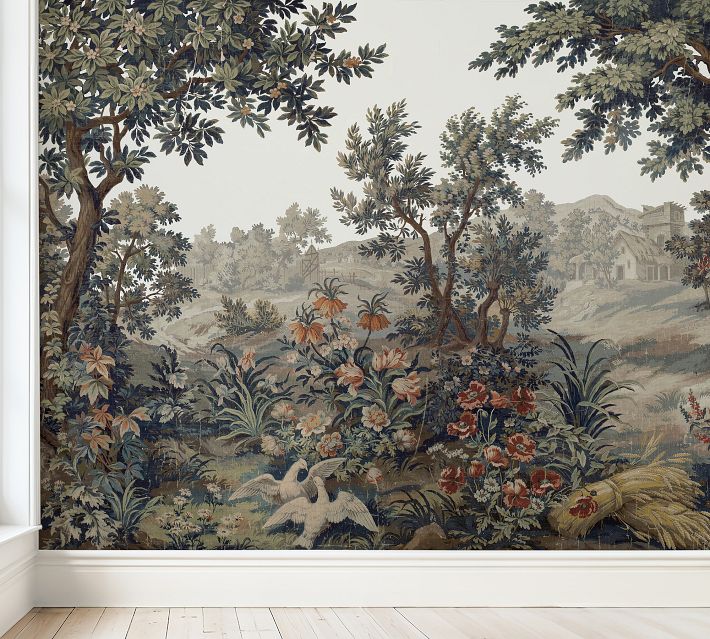
Create a Feature Wall
You do not always need to cover every wall with wallpaper.
A feature wall can introduce pattern without overwhelming the room. Common locations include the wall behind a bed, sofa, dining table, fireplace, or television unit.
Choose a wall that naturally attracts attention when someone enters the room. The wallpaper can then act as a visual anchor for the rest of the furniture arrangement.
Keep Surrounding Walls Simple
When using detailed wallpaper on one wall, consider keeping the remaining walls relatively simple.
Select a paint colour that appears within the wallpaper pattern or complements its main tones. This creates a visual connection between the feature wall and the rest of the room.
Coordinate Wallpaper With Furniture
Furniture does not need to match the wallpaper exactly.
Instead, look for colours, materials, or shapes that work together. If the wallpaper includes several colours, choose one or two tones to repeat through cushions, chairs, rugs, curtains, or decorative objects.
For wallpaper with a strong pattern, furniture with simple upholstery and clean forms can help maintain balance.
Avoid Too Many Competing Patterns
Using several patterns in one room can work, but each one should have a clear role.
If the wallpaper is highly detailed, choose simpler patterns for curtains, upholstery, and cushions. If the wallpaper is subtle, you may have more flexibility to introduce patterned fabrics elsewhere.
Varying the scale of patterns can also help prevent the room from looking visually crowded.
Consider Lighting and Wallpaper Colour
Lighting has a significant effect on wallpaper.
Rooms with plenty of natural light can usually accommodate darker or more detailed designs. Rooms with limited daylight may benefit from lighter shades that reflect more light across the space.
Artificial lighting also matters. Warm lighting can make beige, cream, brown, and similar colours appear richer, while cooler lighting can influence blue, grey, and green tones differently.
Use Wallpaper in Smaller Areas
Kravet wallpaper can also be used beyond full walls.
You can apply wallpaper inside built-in shelving, behind open bookcases, inside wall panels, or within alcoves. These smaller areas allow you to introduce pattern while keeping the larger room relatively understated.
Wallpaper can also work well in entryways, powder rooms, or reading corners where a smaller surface can support a more detailed design.
Coordinate Accessories Carefully
Once the wallpaper is installed, accessories should support rather than compete with it.
Artwork, mirrors, lamps, cushions, and decorative objects can repeat colours from the wallpaper. However, avoid filling every available surface.
Leaving some visual space around patterned walls can make the wallpaper easier to appreciate.
Select Artwork That Complements the Pattern
When placing artwork on a wallpapered wall, consider simple frames and artwork with clear shapes.
Highly detailed artwork placed over highly detailed wallpaper can be difficult to distinguish. In contrast, simple pieces can stand out while still working with the background.
Pay Attention to Installation
Proper installation is important for the final appearance of wallpaper.
Walls should be clean, smooth, and properly prepared before application. Patterned wallpaper also requires careful alignment so that designs connect correctly between sections.
For complex patterns or larger rooms, professional installation may help achieve consistent seams and accurate pattern matching.
Final Thoughts
Understanding How Can You Decorate a Room With Kravet Wallpaper comes down to balancing pattern, colour, furniture, lighting, and room proportions. Start by considering how the space is used, then select wallpaper that supports the overall design rather than dominating it unnecessarily.
Whether you cover an entire room, create a feature wall, or use wallpaper in a smaller architectural detail, careful planning can help create a coordinated interior. By testing samples, limiting competing patterns, and choosing complementary furnishings, Kravet wallpaper can become a considered part of the room's overall design.