


How Do You Choose Waverly Fabric for Your Home?
Choosing fabric for your home involves more than finding a colour or pattern you like. The right fabric should suit the purpose of the room, coordinate with existing furniture, and meet practical requirements such as durability, maintenance, and comfort.
If you are asking, how do you choose Waverly fabric for your home? , it helps to consider each element separately. From upholstery and curtains to cushions and decorative accents, fabric can influence how a room looks and feels. Taking time to assess colour, pattern, texture, and intended use can help you make a more considered choice.
Start With the Purpose of the Fabric
Before looking at colours and patterns, decide how you intend to use the fabric. Different applications have different requirements.
Fabric for a decorative cushion does not experience the same level of wear as fabric used on a sofa or dining chair. Similarly, curtains require material that hangs well and works with the amount of natural light entering the room.
For upholstery, look at the fabric's suitability for regular use. For decorative applications, you may have greater flexibility with texture, pattern, and weight.
Consider How Often the Fabric Will Be Used
Frequency of use should influence your selection.
A chair used every day may require a different fabric from an occasional chair in a guest bedroom. Homes with children or pets may also benefit from materials that are easier to maintain.
Understanding these practical requirements before selecting a design can narrow down the options considerably.
Look at Your Existing Colour Scheme
Your chosen fabric should work with the colours already present in the room.
Consider the walls, flooring, furniture, rugs, curtains, and larger decorative pieces. You do not need to match every colour exactly. Instead, look for tones that complement or connect with the existing palette.
If the room is mainly neutral, patterned Waverly fabric can introduce additional colour. In a room that already contains several strong colours, a more restrained fabric may create better visual balance.
Use Fabric Samples in the Actual Room
Colours can appear different depending on lighting and surrounding materials.
Take fabric samples into the room where they will be used and examine them at different times of day. Natural daylight, lamps, and overhead lighting can each affect how a colour appears.
Place samples next to furniture, flooring, and wall finishes to see how the different elements work together.
Choose a Pattern With the Room in Mind
Patterns can influence the visual character of a room.
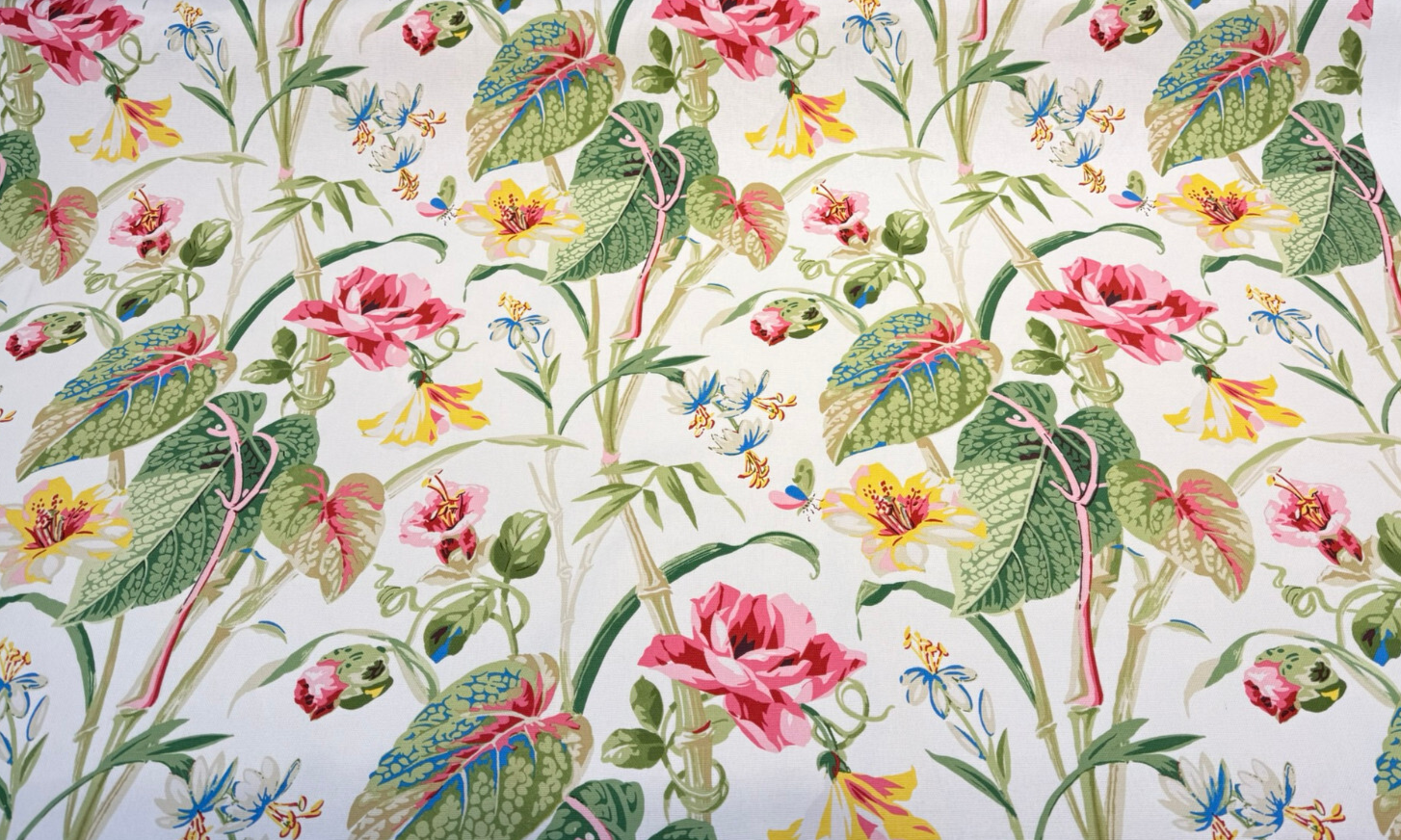
Floral patterns can work with traditional, country-inspired, or layered interiors, while stripes and geometric designs may provide a more structured appearance. Smaller motifs tend to appear more subtle from a distance, whereas larger patterns can become a prominent feature.
Consider the size of the room and the furniture when choosing pattern scale.
Balance Large and Small Patterns
If your room already includes patterned curtains, rugs, or cushions, avoid introducing too many designs of a similar scale.
For example, a large floral upholstery pattern can be paired with smaller geometric or striped accents. Alternatively, patterned curtains can be combined with plain upholstery.
Creating variation in pattern size helps individual elements remain visually distinct.
Consider Fabric Texture
Texture is another factor that can change how a room feels.
Smooth fabrics may create a cleaner appearance, while textured materials can add depth to furniture and soft furnishings. The appropriate choice depends on where the fabric will be used and how it interacts with other materials in the room.
Wood, metal, glass, leather, and natural flooring can all affect how a fabric texture appears within the overall interior.
Think About Durability and Maintenance
Practical performance is particularly important when selecting fabric for frequently used furniture.
Check whether the fabric is recommended for upholstery, drapery, or decorative use. Some fabrics are designed specifically for particular applications and may not perform equally well in others.
Maintenance requirements should also be considered. Review the manufacturer's care instructions before choosing a fabric, especially for areas where spills, dust, or frequent handling are likely.
Match Maintenance to Your Lifestyle
A fabric that requires specialist cleaning may be appropriate for a formal room but less practical for a busy family space.
Think about how much time you are prepared to spend on cleaning and maintenance. Selecting fabric that suits your household routine can make it easier to maintain its appearance over time.
Coordinate Curtains and Upholstery
Curtains and upholstered furniture occupy large areas within a room, so their relationship deserves careful attention.
They do not need to use identical fabric. Instead, you can create a connection through colour, pattern, or texture.
For example, patterned curtains can be combined with plain upholstery in a colour taken from the curtain design. Alternatively, a patterned chair can provide contrast against simpler window treatments.
Use Fabric for Smaller Decorative Details
If you do not want to introduce a large amount of pattern, consider using Waverly fabric for smaller accents.
Cushions, window seats, lampshades, table runners, or occasional chairs can provide opportunities to introduce colour and pattern without changing the entire room.
This approach can also help you test how a particular design works within your interior before using it more extensively.
Check Scale Before Making a Final Choice
A fabric pattern viewed on a small sample can look very different when applied to a large sofa, curtain, or headboard.
Check the full pattern repeat whenever possible. Consider where the main elements of the pattern will appear once the fabric is cut and installed.
For upholstery, pattern placement may affect the finished appearance, particularly on chairs and sofas with several separate sections.
Final Thoughts
So, how do you choose Waverly Fabric for Your Home? Start by considering where the fabric will be used, how often it will be handled, and how it relates to the existing room.
Colour and pattern are important, but durability, texture, maintenance, lighting, and scale also deserve attention. Testing fabric samples in the actual space and comparing them with existing furnishings can help you make a more informed decision.
Whether you are selecting material for curtains, upholstery, cushions, or smaller decorative details, a balanced approach can help the fabric fit naturally into the room while meeting its practical requirements.