


How Do You Style Mind The Gap Pillows at Home?
Decorative pillows can influence the overall look of a room without requiring major changes to furniture, flooring, or wall treatments. They can introduce colour, texture, pattern, and contrast while also making seating areas feel more complete. Mind The Gap pillows are often selected for interiors where detailed patterns, distinctive prints, and layered styling are important.
If you are wondering, how do you style Mind The Gap Pillows at Home?, the answer depends on the room, existing furniture, colour palette, and the level of visual contrast you want to create. A carefully arranged combination of pillows can complement sofas, beds, accent chairs, and reading areas while supporting the broader interior style.
Start With the Existing Colour Palette
Before adding decorative pillows, consider the colours already present in the room. Look at your sofa, curtains, rugs, flooring, walls, and larger furniture pieces.
If the room mainly uses neutral shades such as beige, cream, grey, or white, patterned pillows can introduce stronger colours without overwhelming the space. Designs containing blue, green, rust, burgundy, or ochre can add depth to neutral seating.
In rooms that already contain several colours, it is generally better to choose pillows that repeat one or two existing shades. This helps create visual continuity rather than making each decorative element compete for attention.
Use One Colour as a Connecting Element
A simple way to coordinate multiple pillows is to select one repeated colour.
For example, if one pillow contains blue, cream, and green, another pillow might use blue as its main colour but feature a completely different pattern. The repeated shade connects the pieces while allowing each design to remain distinct.
Mix Patterns With Care
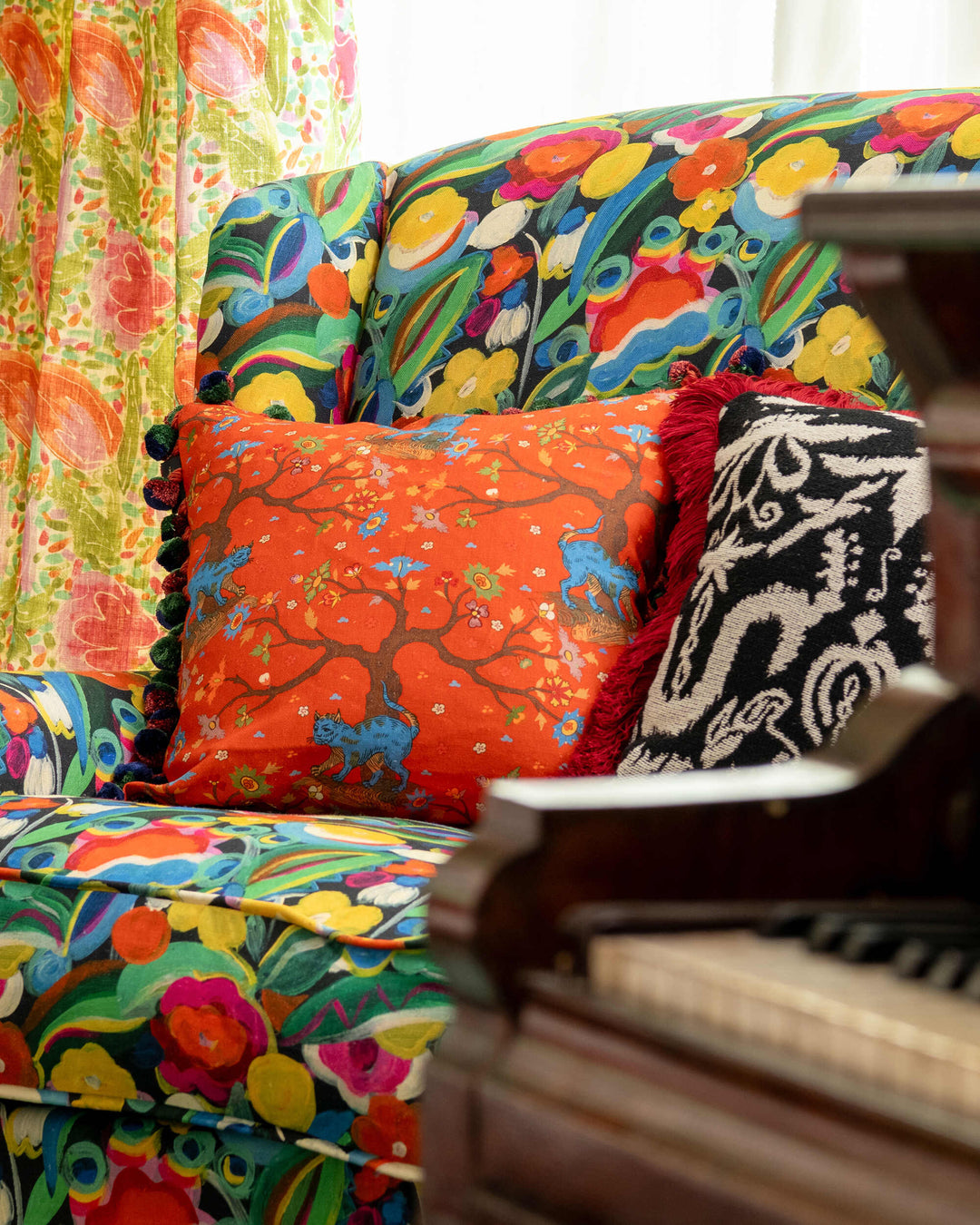
Pattern mixing can give a seating area more character, but balance is important. Using several highly detailed patterns of the same scale can make the arrangement appear crowded.
A practical approach is to combine different pattern sizes. One pillow might feature a large botanical motif, another a smaller geometric design, and a third a relatively simple texture or solid colour.
This creates variation while preventing the patterns from blending into one visually busy surface.
Combine Different Pattern Types
Consider mixing designs such as:
-
Botanical prints with geometric patterns
-
Animal-inspired motifs with plain textiles
-
Large-scale prints with smaller repeating designs
-
Detailed illustrations with simple stripes
-
Strong patterns with textured solid colours
The goal is not to make every pillow identical. Instead, the pillows should share enough common elements to appear intentionally grouped.
Choose the Right Number of Pillows
The number of pillows depends largely on the size of the furniture.
A compact two-seater sofa may only need two or three decorative pillows. A larger sectional can accommodate several pillows without appearing overcrowded.
Odd-number arrangements, such as three or five pillows, often create a relaxed appearance. However, symmetrical arrangements can work well in formal interiors.
For example, a three-seat sofa might have two larger pillows at each end and one smaller decorative pillow in the centre.
Layer Different Pillow Sizes
Using pillows of identical dimensions can make an arrangement look flat. Layering different sizes creates more visual depth.
Larger pillows can be positioned at the back, while medium and smaller cushions sit in front.
For example, you could begin with 22-inch pillows, add 20-inch cushions, and finish with a smaller rectangular or lumbar pillow. The exact dimensions can vary depending on the sofa or bed.
Consider Pillow Shape as Well as Size
Square pillows are the most common, but introducing rectangular or lumbar cushions can make the arrangement more varied.
Round cushions may also work as occasional accents, especially when the surrounding furniture contains straight lines and angular shapes.
Style Mind The Gap Pillows on a Sofa
When styling a sofa, begin with the largest pillows at either end. These create the foundation of the arrangement.
Add smaller patterned pillows toward the centre. If the sofa itself has a strong colour, select pillows that either complement that shade or introduce controlled contrast.
For a neutral sofa, there is more flexibility to use detailed prints and stronger colour combinations.
Avoid covering the entire backrest with cushions. Leaving some visible sofa upholstery helps the arrangement feel balanced and also keeps the seating practical.

Use Decorative Pillows in the Bedroom
Decorative pillows can also help create a layered bed arrangement.
Start with sleeping pillows at the back, followed by larger decorative cushions. Place smaller accent pillows or a lumbar cushion toward the front.
The colours do not need to match the bedding exactly. Instead, choose pillows that repeat selected colours from the duvet, headboard, curtains, or nearby rug.
For patterned bedding, simpler accent pillows may work better. With plain bedding, more detailed patterns can become the primary decorative feature.
Pair Pillows With Other Textiles
Pillows should be considered alongside other fabrics in the room.
Curtains, upholstered chairs, rugs, throws, and carpets all influence how pillow designs appear. Repeating similar colours across different textiles can make the interior feel connected.
For instance, a green shade found in a patterned pillow may also appear in curtains or an area rug. The colours do not need to be identical, but similar tones can help establish consistency.
Avoid Matching Everything Exactly
Using the same print across cushions, curtains, upholstery, and other textiles can make a room feel overly coordinated.
Instead, combine related patterns and colours. This creates a more natural layered appearance while allowing each design element to contribute something different.
Match Pillows to the Interior Style
The surrounding interior should influence the way decorative pillows are selected and arranged.
Traditional rooms can accommodate layered patterns, detailed motifs, and richer colours. Contemporary spaces may benefit from limiting the number of prints and allowing one patterned cushion to serve as the main accent.
Eclectic interiors offer greater freedom to combine different prints, colours, and cultural influences, although repeating colours can still help maintain visual consistency.
Minimal interiors can also include patterned pillows, but using fewer pieces may preserve the clean appearance of the room.
Consider Comfort and Practical Use
Decorative styling should not make furniture difficult to use.
A sofa overloaded with cushions can require pillows to be removed every time someone sits down. Instead, choose a number that provides visual interest while leaving enough seating space.
In frequently used rooms, consider pillow covers that can be removed for cleaning. Fabric care instructions should also be reviewed before washing or spot cleaning.
Conclusion
Learning How Do You Style Mind The Gap Pillows at Home begins with understanding the room rather than focusing only on individual pillow designs. Existing colours, furniture size, pattern scale, textile combinations, and practical use all influence the final arrangement.
Start with a clear colour connection, mix different pattern scales, layer several pillow sizes, and avoid matching every textile exactly. Whether the pillows are used on a living room sofa, bedroom, accent chair, or reading corner, thoughtful placement can help create a balanced and coordinated interior without requiring extensive decorative changes.