


What Patterns Are Popular in Scalamandre Fabric?
Scalamandre fabric is known for decorative patterns that draw from historic interiors, nature, traditional textiles, and distinctive graphic motifs. Its collections often feature designs that work well in living rooms, bedrooms, dining spaces, and formal interiors where fabric is used as an important decorative element.
If you are asking, 'What Patterns Are Popular in Scalamandre Fabric', the answer usually includes animal motifs, florals, botanical prints, stripes, damasks, geometrics, and heritage-inspired designs. Each pattern type creates a different visual effect, so the right choice depends on the room, furniture, colour palette, and level of detail you want to introduce.
Animal Motifs in Scalamandré Fabric
Animal patterns are among the most recognisable designs associated with Scalamandre. These fabrics often feature stylised zebras, birds, leopards, or other animals arranged in a decorative repeat.
Animal motifs can work well when used as an accent rather than across every surface in a room. For example, they may be used on a statement chair, cushions, a bench, or curtains.
Why Animal Patterns Stand Out
Animal prints naturally attract attention because they contain distinctive shapes and movement. In a room with plain walls and neutral furniture, this type of fabric can provide a strong focal point.
When using a detailed animal motif, it is often helpful to keep nearby fabrics simpler. Solid colours, narrow stripes, or subtle textures can prevent the overall scheme from becoming too busy.
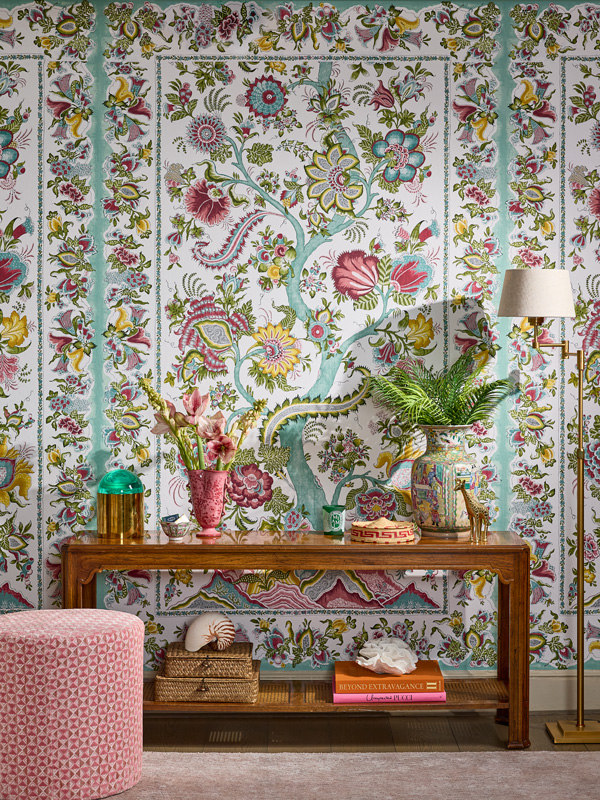
Floral Scalamandre Fabric Patterns
Floral patterns are another important part of Scalamandre fabric collections. These designs may range from small, tightly arranged flowers to larger decorative blooms with leaves and branches.
Floral fabric can suit both traditional and transitional interiors, depending on the scale and colour palette.
Large floral prints tend to make a stronger statement and may work well on curtains or upholstered furniture. Smaller florals can be easier to introduce through cushions, occasional chairs, or decorative panels.
Choosing the Right Floral Scale
Pattern scale should be considered alongside room size and furniture proportions.
A large floral design can work well in a spacious room with broad furniture surfaces. In a smaller room, a medium or small-scale floral pattern may create a more balanced appearance.
The surrounding décor also matters. If the wallpaper or curtains already contain noticeable patterns, selecting a simpler floral fabric can help maintain visual order.
Botanical and Nature-Inspired Designs
Botanical designs often feature leaves, branches, vines, trees, and garden-inspired elements. These patterns can introduce detail without relying entirely on traditional floral arrangements.
Botanical Scalamandre fabrics may work particularly well in rooms that use natural materials such as wood, stone, rattan, or linen.
The colours used in these designs often include greens, blues, neutrals, and earth tones, although brighter variations are also available.
Botanical patterns can be used for full-length curtains, dining chairs, upholstered headboards, or accent cushions.
Stripes and Linear Patterns
Stripes are among the most versatile fabric patterns because they can coordinate with many other designs.
Scalamandre striped fabrics may include narrow, wide, alternating, or decorative stripe arrangements. They can help create structure when combined with florals, animal prints, or elaborate traditional patterns.
Vertical stripes on curtains can make windows appear taller, while striped upholstery can add definition to chairs, benches, and sofas.
Mixing Stripes With Other Patterns
Stripes often work well as a supporting pattern because their clean lines contrast with organic designs such as flowers, leaves, and animals.
For example, a room might combine floral curtains with striped cushions and a plain sofa. Repeating one or two colours across these fabrics can help the arrangement feel coordinated.
Damask and Traditional Patterns
Damask patterns have long been associated with formal interiors. They usually feature symmetrical decorative motifs arranged in a repeating structure.
Scalamandre damask fabrics can suit dining rooms, formal sitting rooms, bedrooms, and other spaces where a classic appearance is preferred.
These patterns are often used for curtains, upholstered chairs, decorative wall panels, and headboards.
The level of contrast within the fabric can change its visual effect. A low-contrast damask may appear subtle, while a strongly contrasting version can become one of the main decorative features in the room.
Geometric Scalamandré Fabrics
Geometric patterns provide an alternative to floral and traditional designs. They may feature repeating shapes, angular forms, lattice structures, or symmetrical arrangements.
These fabrics can fit both modern and traditional interiors depending on the colours and scale of the pattern.
Geometric designs are particularly useful when a room already contains curved furniture or organic decorative elements because they introduce visual structure.
They can also be paired with floral or botanical patterns to create contrast.
Heritage and Historical Designs
Scalamandre is also associated with patterns influenced by historic textiles and decorative arts. These may reference classical motifs, archival designs, European decorative traditions, or Asian-inspired patterns.
Heritage designs can work well in interiors that include antiques, traditional furniture, detailed moldings, or decorative wallpapers.
However, they do not need to be limited to formal spaces. When paired with simpler furniture, a historical fabric can create an interesting contrast in a more contemporary room.
Scenic and Decorative Prints
Some Scalamandre fabrics feature scenic imagery, architectural details, landscapes, or narrative-style compositions.
These designs typically contain more visual information than simple repeating patterns, making them suitable for areas where the fabric can be seen clearly.
Curtains, large cushions, upholstered screens, and occasional chairs can provide enough surface area to display the design effectively.
Because scenic fabrics tend to be detailed, they usually pair well with solid or lightly textured materials.
How to Choose the Right Scalamandre Pattern
When selecting a pattern, consider the room as a whole rather than focusing only on the fabric sample.
Start by looking at the existing wall colour, flooring, furniture, curtains, artwork, and other textiles. Decide whether the new fabric should become a focal point or support the existing design.
Also consider scale. Large patterns generally require more visual space, while smaller patterns can be easier to use across several furnishings.
Finally, compare samples in the actual room. Natural and artificial lighting can significantly affect how colours and details appear.
Conclusion
So, What Patterns Are Popular in Scalamandre Fabric Popular choices include animal motifs, florals, botanicals, stripes, damasks, geometrics, scenic prints, and heritage-inspired designs. Each pattern category offers a different way to introduce colour, texture, and detail into an interior.
The most suitable option depends on the size of the room, existing furnishings, colour palette, and where the fabric will be used. By considering scale, placement, and surrounding patterns, Scalamandre fabric can be incorporated in a way that feels balanced, coordinated, and appropriate for the overall interior.